
UK Risks 2027 Recession as Prolonged Strait of Hormuz Closure Threatens Energy Shock
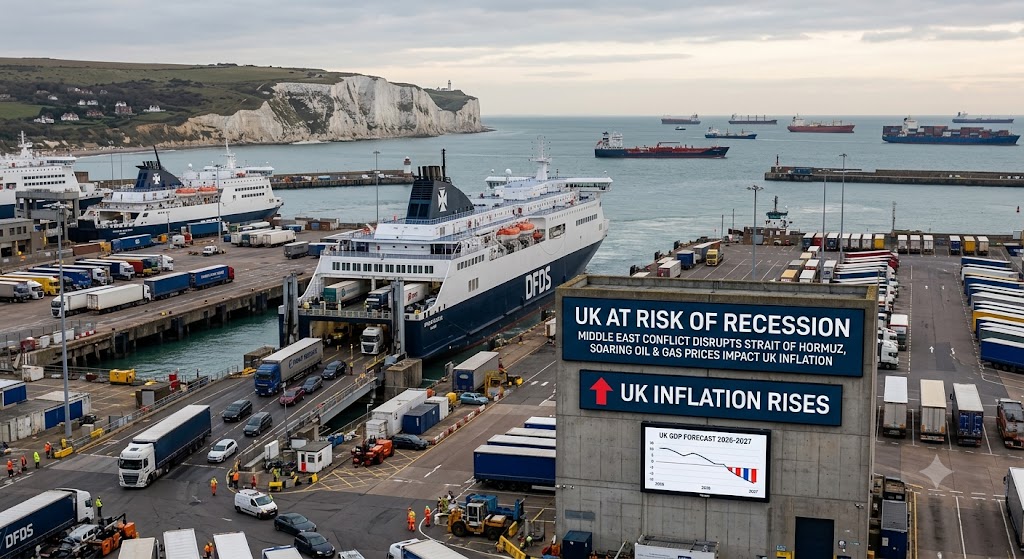
Disclaimer: This image is generated by artificial intelligence
The UK economy could be forced into a recession next year if ongoing regional conflicts keep the Strait of Hormuz closed into 2027, according to the latest economic outlook from EY.
The Strait of Hormuz normally serves as a transit route for approximately one-fifth of global oil and gas supplies. Under EY’s adverse scenario—where the key maritime bottleneck remains shut through early or mid-2027—UK gross domestic product (GDP) growth is projected to slow to 0.5% in 2026 before contracting by 0.2% in 2027.
Such an extended disruption could cause Consumer Prices Index (CPI) inflation to surge to 6.4% by the end of 2026 as energy and fuel prices spike.
Baseline Outlook and Interest Rate Expectations
Should the shipping corridor reopen by the end of Q3 2026, EY’s core projection anticipates economic resilience. The forecasting body raised its baseline 2026 UK growth projection slightly to 0.9% (up from 0.8%) while holding its 2027 expansion forecast at 1.2%.
Under this baseline model:
- Interest Rates: The Bank Rate is expected to hold steady at 3.75% through the remainder of 2026 before sequential 25-basis-point cuts in April and July 2027, bringing the rate to 3.25%.
- Central Bank Stance: The Bank of England recently held interest rates at 3.75%, though policymakers noted readiness to raise rates if prolonged Middle East conflicts drive inflation higher.
- Business & Consumer Spending: Business investment forecasts have been downgraded to a 0.7% contraction in 2026. Household spending is expected to remain subdued at 0.3% growth in 2026 before recovering to 0.9% in 2027.
Peter Arnold, Chief Economist at EY UK, highlighted that while the economy has shown resilience, persistent energy market disruptions will test economic stability if closures extend into next year.
Source / Reference: The Independent