Why Companies Are Turning Hiring Into Competition Contests
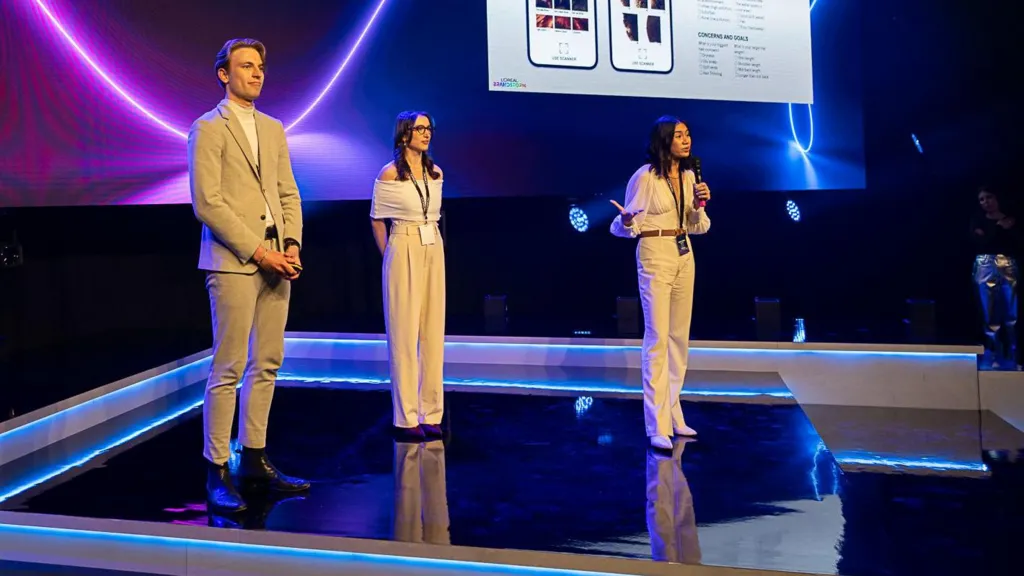
Yumi Liberman, centre, and two friends pitched a business idea to French cosmetics company L'Oreal
How Major Corporations Are Transforming Job Recruitment Into Talent Show Contests
Yumi Liberman was standing on stage in front of a panel of judges and an audience of 300 people, tasked with delivering a winning performance. Rather than singing, dancing, or playing an instrument, she and two friends were in a London auditorium in 2024 to pitch a business concept, hoping to secure full time employment with cosmetics giant L’Oreal.
"It reminded me of when I used to do competitive sports growing up and the pressure would get heavy," says Liberman, now 24. "But somehow you just get into flow mode."
She and her teammates had advanced to the UK final of Brandstorm, an international competition operated by the French company where young adults present original product and business ideas. Their proposal for a haircare application earned them the UK title, sending them to that year’s global final in Paris where they secured third place.
While only members of the winning team automatically received full time job offers, Liberman impressed senior executives at the company sufficiently to earn a position on its marketing management traineeship, which leads to a full time role upon completion.
Turning recruitment into competition style contests with employment as the reward generates publicity and engagement for corporate employers. For job candidates, however, the trend raises questions regarding fairness and pressure.
In the current economic climate, youth unemployment remains significantly higher than the national average across multiple nations as firms remain hesitant to expand headcount. In the UK, the unemployment rate for young adults stands at 16.2 percent, compared with the national benchmark of 4.9 percent.
Initiatives like L’Oreal’s offer a potential entry point into competitive industries. Nevertheless, the vast majority of the 380,000 global applicants who entered the competition this year, up 58 percent from 240,000 in 2025, received no position or award.
L’Oreal told the BBC that the Brandstorm program helps the business connect with a wider pool of prospective talent, including young individuals who might not otherwise consider applying through standard corporate channels.
Intimidating Evaluation Methods While Liberman found value in the structured contest format, other professionals who have experienced similar competitive hiring setups express strong reservations.
Melissa Alcruz, who currently works in marketing for a New York City real estate firm, previously held a similar role at the television network MTV. During her tenure at MTV, she participated in an internal process for a promotion that staff referred to as a "bake off". Candidates were required to develop sponsorship and marketing campaigns before pitching their proposals directly to a panel of seven people.
"This is intimidating, even for a seasoned professional. I ultimately got the job, but even though I won I disliked the process," says Alcruz.
Jamie Kohn, senior director for talent acquisition at the research firm Gartner, suggests that competitive hiring formats will persist because employers find it easier to evaluate candidate capabilities than through standard interview questions. However, Kohn notes that companies must remain cautious regarding the demands placed on applicants. Organizations should focus on providing constructive feedback so candidates build their professional capabilities even if they are not selected.
Extrovert Bias and Alternative Paths Psychologist Amanda Potter highlights concerns that competition style recruitment tends to favour extroverted personalities, placing quieter individuals at an immediate disadvantage.
"Does this approach encourage all types of people to apply, or would certain types of people avoid these assessment methods?" she says. "This could result in an organisation [ending up] full of ambitious, competitive people who want to win, possibly to the detriment of others."
Conversely, Liberman, who lives with severe dyslexia, explains that navigating a standard application process with written psychometric testing would have presented greater personal hurdles. Participating in the competition enabled her to enter her chosen industry immediately after graduating from university, avoiding prolonged unemployment.
"I have a lot of friends coming from extremely reputable backgrounds, extremely educated people who have applied to over 1,000 jobs, and have been jobless," Liberman says.
Source: BBC