OpenAI Claims Breakthrough on 90 Year Old Navier Stokes Problem Amid Controversy
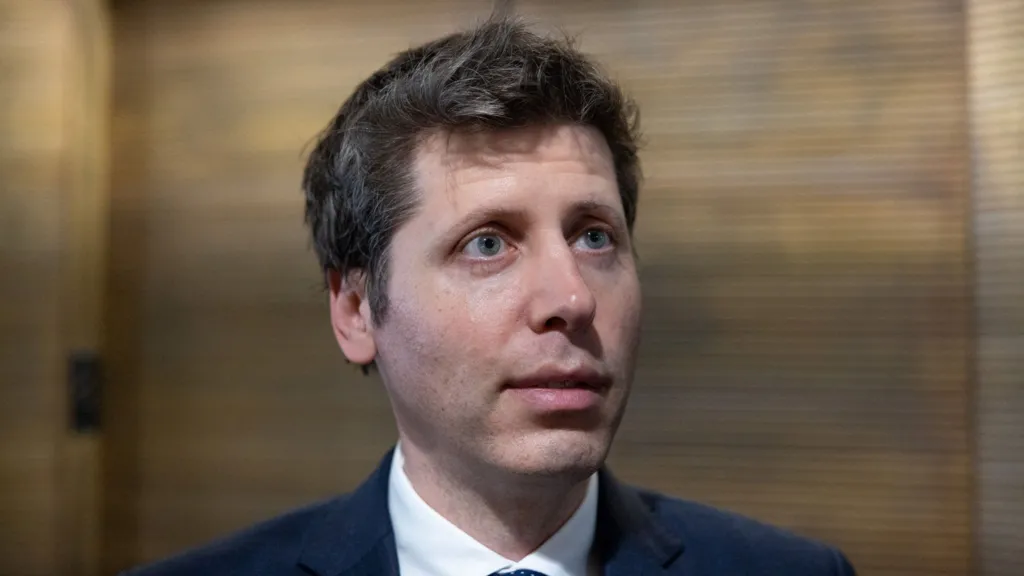
Sam Altman has in recent years become one of the most well known tech CEOs in the world.
OpenAI states that it has found a solution to an advanced mathematics problem that has stood for decades, completing the work in 88 hours using a new artificial intelligence model alongside thousands of automated tools.
The ChatGPT maker said on Tuesday that by deploying roughly 10,000 AI agents, which are automated bots that execute tasks with relative autonomy, it resolved a complex mathematical challenge. The effort targeted the Navier Stokes equations, which describe how fluids move. Important aspects of these equations have lacked a formal mathematical proof for 90 years.
OpenAI called the findings a milestone that illustrates how rapidly automated systems are improving.
The claim has not been verified independently or accepted by The Clay Mathematics Institute. The research organisation based in the United States manages the Millennium Prize, which awards substantial financial prizes to anyone who can solve specific mathematical puzzles.
The announcement has faced immediate criticism from external researchers.
Tristan Buckmaster, a mathematics professor at New York University, said on Tuesday that he and Levent Alpöge, a mathematician affiliated with OpenAI competitor Anthropic, had been working on the same problem. The pair used the OpenAI tool Codex during their research.
Buckmaster stated that on 3 September, he learned that "information about our progress had been passed to OpenAI".
His statement was published hours before OpenAI released its own findings on Tuesday. Buckmaster alleged that OpenAI did not begin its specific effort on the Navier Stokes equations until "after information about our work had reached OpenAI". He published extracts from emails sent to OpenAI regarding the timeline and methodologies involved.
Buckmaster noted that while he had not read the full proof from OpenAI, he felt an obligation to speak out publicly about "what I was told, when, and what was proposed to me...because the alternative is to let a sequence of announcements say something I know to be false".
OpenAI congratulated Buckmaster and Alpöge on Tuesday for their concurrent work, describing their efforts as remarkable.
The firm stated that it had not seen "any of their work through any means until they released it publicly" and confirmed that no user data was accessed during its work on the equations.
"While unlikely, we cannot rule out that de-identified data derived from their usage of our products helped improve our models", the company stated. "However, our proofs differ significantly and even the precise results proved are different."
OpenAI noted that at the end of August, it began training a new model that demonstrated strong mathematical abilities. The model remains an internal tool because it is "significantly more capable" than the latest public release from the firm, leading researchers to apply it to select mathematical challenges.
OpenAI acknowledged that on 1 September, it "heard rumours that two Millennium Prize problems had been resolved" and subsequently directed thousands of automated agents running the new model to attempt solving remaining problems.
By 5 September, approximately 88 hours after setting 10,000 bots to work, OpenAI stated it reached a solution to the Navier Stokes existence and smoothness problem. The problem relates directly to fluid turbulence, a phenomenon that remains incompletely understood in physics.
The computational resources required for the task were substantial. OpenAI reported the following operational metrics for the run:
The automated bots exchanged nearly 3 million messages.
The processing consumed 130 billion output tokens, which represent the lines of text or code generated by the model.
At standard commercial pricing for advanced model output, an equivalent run would cost approximately $10m (£7.3m).
The solution presented by OpenAI addresses two of the four statements required for the Millennium Prize proof. The full prize carries a $1m reward.
"Our goal in releasing this result is to report on the substantial progress of our AI models," OpenAI said on Tuesday. "We do not intend to claim the Millennium Prize for this result."
Reference
Source: BBC